
Clear Aligners in Velachery: How They Work, How Long They Take and Who They Suit
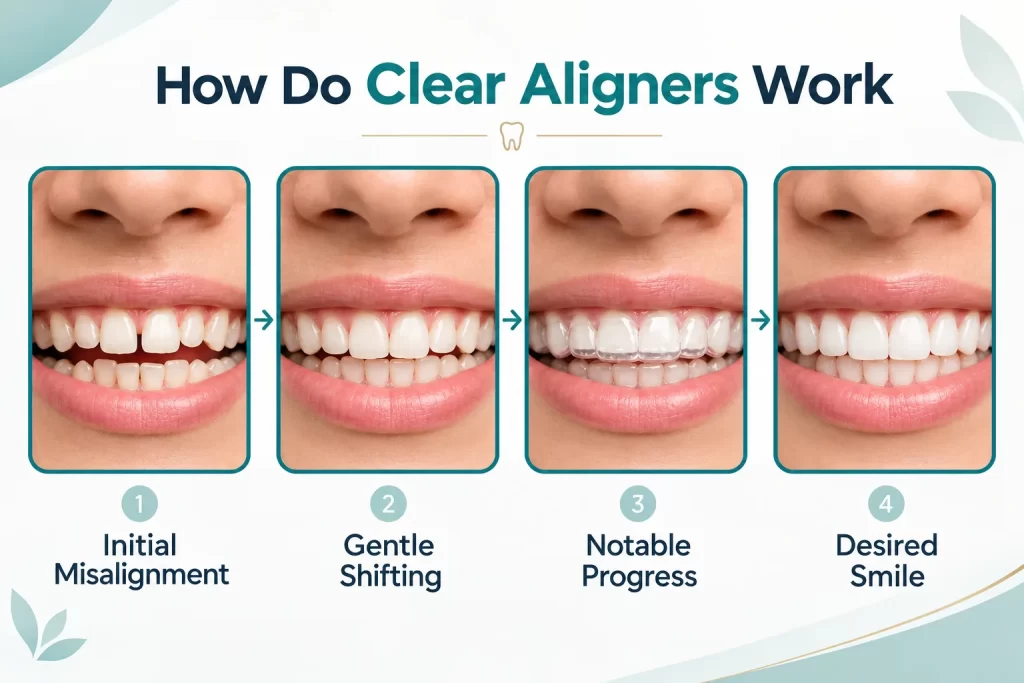
Clear aligners straighten teeth with a series of clear, removable trays, each one moving the teeth a small, planned step. For many mild to moderate cases, treatment lasts about 6 to 18 months, but only if you keep the trays in for 20–22 hours a day. They are a good option for many teens and adults with crowded or spaced teeth or a mild bite problem, if their teeth and gums are healthy. Complex bite or jaw problems are often better treated with fixed braces.
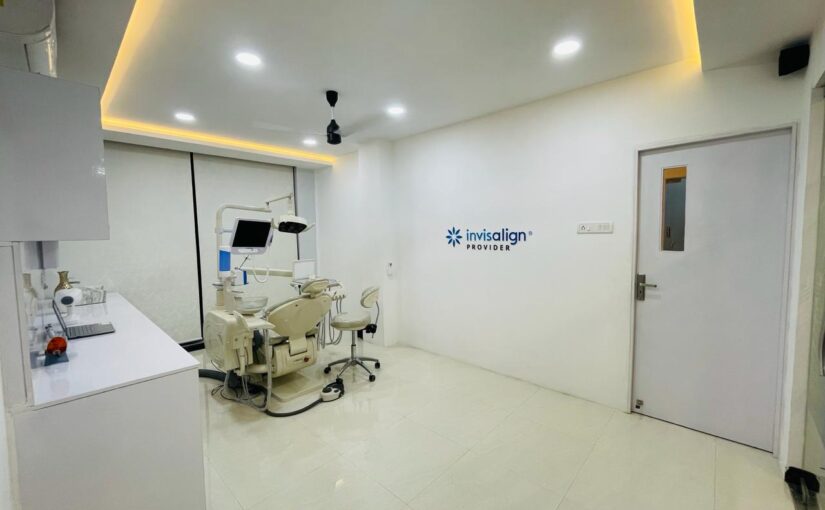
Clear aligners are one of the specialised services at our Velachery clinic, planned from a digital iTero scan. This guide goes deeper than our clear aligners page.

How do clear aligners move teeth?
Each tooth sits in a socket of bone, held in place by tiny fibres. When a tray presses gently and steadily on a tooth, the bone on the pressure side is slowly reshaped and new bone forms behind it. The tooth moves through the bone a fraction of a millimetre at a time. That is why treatment uses a series of trays, each slightly different from the last, instead of one big push.
Why 20–22 hours a day matters
Aligners only work while they are in your mouth. When a tray stays out for long, the teeth begin to settle back, and the next tray may not fit well. Missing an hour now and then slows things a little. Leaving the trays out for many hours a day can stall treatment and lead to extra trays. Remove them only for meals, for drinks other than plain water, and for brushing.
How long do clear aligners take?
The 6-to-18-month range is only a guide. Your own timeline depends on:
- How far the teeth must move. Closing one small gap is quicker than straightening crowding across the whole arch.
- The type of movement. Tilting a tooth is fairly quick. Turning a rounded tooth, such as a canine, or correcting the bite is slower and less predictable.
- How well you wear the trays. This is the part you control.
- Refinements. Some teeth lag behind the plan. A few extra trays at the end are common and can add a few months.
- Your gums and bone. Gum problems must be settled before teeth are moved.
You usually move to a new tray every one to two weeks, as your dentist advises, with check-ups about every 6–8 weeks.

Who do clear aligners suit?
Aligners are often a good fit for teenagers and adults with mild to moderate crowding or spacing, and for teeth that drifted again after braces years ago. They can also correct some overbite, underbite and crossbite problems. Above all, they suit people who will keep the trays in for most of the day and night.
Fixed braces may be the better choice when the bite problem comes from the position of the jaws, or when teeth are badly turned or must move a long way. They also suit people who know they would struggle to keep removable trays in. Teenagers can wear aligners once most of their adult teeth are through, with a parent ready to give reminders.
Adults with a history of gum disease
Many adults who want straighter teeth have had gum problems, and gum disease itself can make front teeth drift and gaps open. Moving teeth through inflamed gums can speed up bone loss, so the gums must be treated and stable first. Dr. Sivaranjani, whose MDS is in periodontics, checks your gums and the bone support on X-rays before aligners are planned. See gum treatment in Velachery.

Once the gums are healthy, aligners can often still be used, with gentle steps and close monitoring. Because the trays come out for brushing, keeping the gums clean is usually easier than with fixed braces. If you have had gum disease, expect gum maintenance visits every 3–4 months during treatment, alongside your aligner check-ups.
What to expect along the way
Teeth often feel a little loose while they are moving. This is normal, and they firm up once retainers hold them in place. As with any tooth-straightening treatment, the roots can shorten slightly. This is usually minor, and it is one reason progress is reviewed at regular check-ups.
Do not sip sweet drinks, including tea or coffee with sugar, with the trays in. Sugar trapped under the plastic sits against your teeth and can cause decay.
After aligners: why retainers matter
Aligners move teeth; retainers hold them. Teeth tend to shift throughout life, so retainers are part of the treatment, not an extra. You usually wear them day and night for the first months, then only while you sleep, for as long as you want to keep the result. Some people also have a thin wire bonded behind the front teeth.
Frequently asked questions
Is Invisalign painful?
It is usually more uncomfortable than painful. Most people feel tightness for the first day or two of each new tray, and then it eases. Switching to a new tray at bedtime helps you sleep through the tightest part. If a tray edge rubs, it can be smoothed at the clinic. If you need a painkiller, ask us which one suits you.
How long does Invisalign take?
Often 6 to 18 months for mild to moderate cases, and longer for complex ones. Closing a single small gap may take only a few months. Your plan shows the expected number of trays before you start. Wearing them as advised is what keeps you on schedule.
Do aligners work for gaps?
Yes. Small to moderate gaps are one of the most common reasons people choose aligners. The cause of the gap matters, though. Gaps opened by gum disease need gum treatment first. A space left by a missing tooth may be better kept for an implant or a bridge. Retainers keep closed gaps from opening again.
Do aligners change face shape?
Not the bones of your face. Aligners move teeth within the jaw, so the size and shape of the jaws stay the same. When crowded or protruding front teeth move, your lips may rest a little differently. Problems that come from the jaws themselves need other treatment.
Invisalign vs braces: which is better?
Neither is better for everyone. Aligners are hard to notice, come out for meals and make cleaning easier, but they depend on you wearing them. Braces work all the time and can handle more complex movements. Neither is always faster; speed depends on the case and on wear. At your consultation we explain which suits your teeth, and why.
Should I choose Invisalign or another clear aligner? What about at-home aligners?
Aligner systems work on the same principle; the planning and the supervision matter more than the brand. Whichever you choose, look for an in-person examination with X-rays and a gum check before treatment, regular check-ups during it, and a clear plan for retainers. Here in Velachery, your treatment begins with an in-person examination, X-rays and a digital iTero scan, and we see you regularly until your retainers are fitted.
Book a visit in Velachery
Want to know if aligners are right for you? Book an aligner consultation with Dr. Sivaranjani and our team. Call +91 99977 97777, WhatsApp us or get directions.
Luxe Dental Clinic, No 3, 76A, Second Floor, Radha Mohan Street, Periyar Nagar, Velachery, Chennai 600042 (near Phoenix MarketCity). Open Monday–Saturday, 10:00 AM – 8:30 PM. Sunday closed. More about our dental clinic in Velachery.
Recent Posts


luxecentre 20 Oct 2026
Bleeding Gums When Brushing: Causes, Home Care and When to See a Periodontist in Velachery

