
Root Canal Treatment in Velachery
Root canal treatment (RCT) saves a tooth whose inner pulp is infected or badly inflamed. This often follows deep decay, a crack or an injury. RCT clears the infection, seals the tooth from inside and usually ends the toothache. It usually takes 1–2 sittings, then a crown on back teeth. At our Velachery clinic, Dr. Sivaranjani treats you from the first X-ray to the final crown.
- ★ 4.9 Google rating
- Periyar Nagar, Velachery (near Phoenix MarketCity)
- Mon–Sat 10 AM – 8:30 PM
What is root canal treatment?
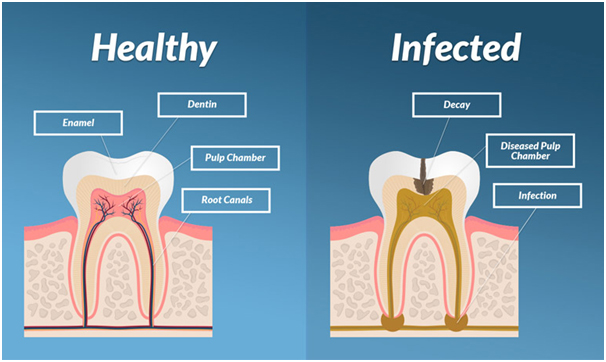
Inside every tooth is soft tissue called the pulp. It holds the tooth’s nerve and blood vessels. Deep decay, a crack, a leaking filling or a knock can let bacteria reach the pulp. The pulp then becomes inflamed or infected.
In RCT, your dentist removes the damaged pulp and cleans the narrow root canals inside the tooth. The canals are then filled and sealed. The tooth stays in your mouth and keeps working.
Root canal or extraction?
Removing the tooth can seem quicker. But a gap lets neighbouring teeth tilt and drift, and chewing gets harder. Filling the gap later needs an implant, a bridge or a denture. Saving your own tooth is usually the simpler long-term choice.
Extraction may be the better option when a tooth cannot be restored. Examples are a crack running deep below the gum, too little tooth left, or severe bone loss. Dr. Sivaranjani will explain both options before you decide.
Who needs a root canal? Signs to watch for
- Pain with hot or cold that lingers after the food or drink is gone
- Pain when you bite or press on the tooth
- A throbbing toothache that may wake you at night
- Swelling of the gum or face near the tooth
- A small pimple-like boil on the gum that may leak pus
- A tooth that has turned grey or dark after an injury
- A deep cavity or a large, broken filling
Some infected teeth cause no pain and show up only on an X-ray. If a toothache suddenly stops, the infection has not gone. The nerve may have died while the infection spreads. Read 7 signs you need a root canal.
Step by step at our clinic
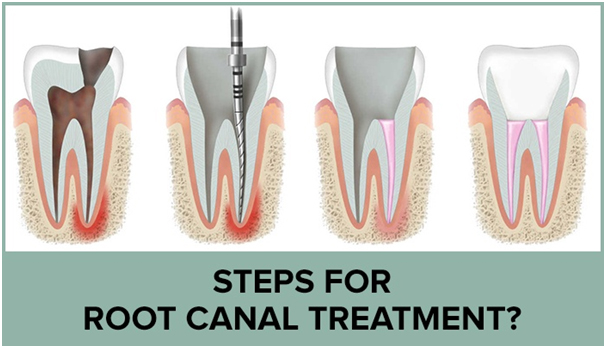
- Check-up and X-ray. Dr. Sivaranjani examines the tooth and takes an X-ray. She may test it with cold or gentle tapping, then explains the plan.
- Numbing. Local anaesthesia numbs the tooth and the gum around it.
- Cleaning the canals. A small opening is made and the infected pulp is removed. The canals are cleaned and shaped with fine instruments and disinfecting rinses.
- Dressing, if needed. With a lot of infection, medicine is placed inside and the tooth is closed with a temporary filling. Treatment is finished at a second sitting.
- Filling and sealing. The canals are filled with a rubber-like material called gutta-percha and sealed. The opening is closed with a filling or core build-up.
- Crown. Back teeth then get a crown for protection. The crown is cemented onto the tooth. It is fixed, not removable. Some front teeth only need a filling.
Is root canal treatment painful?
RCT is done under local anaesthesia. Most people feel pressure rather than pain, much like having a filling. A very inflamed tooth can take longer to numb, and more anaesthetic can be given. Tell us if anything hurts, and we will stop and check.
Some soreness afterwards is normal. The tooth may feel tender to bite on for a few days. Painkillers advised by your dentist usually help.
How many sittings does root canal treatment take?
| Stage | Visits | Typical time |
|---|---|---|
| Check-up and X-ray | 1 | Treatment may start the same day |
| Root canal treatment | Usually 1–2 sittings | Typically 60–90 minutes each |
| Crown (back teeth) | Usually 2 | Ideally within a few weeks of the RCT |
| Review X-ray | At a later check-up | Healing around the root can take months |
Recovery and aftercare
- Wait until the numbness wears off before eating, so you do not bite your cheek or tongue.
- Until the final filling or crown is in place, chew on the other side and avoid hard or sticky foods.
- A temporary filling can wear down slightly. Call us if it falls out.
- Book your crown on time. A root-filled back tooth without a crown can crack, sometimes beyond repair.
Risks and when to call us
RCT is a routine, well-established treatment, and most treated teeth heal well. Possible problems include:
- Flare-up: pain or swelling for a few days after a sitting. This usually settles with medicines.
- Re-infection: bacteria can return, for example through a leaking filling or a delayed crown. The tooth may then need retreatment.
- Fracture: a back tooth without a crown can crack.
- Uncommon problems: very curved or blocked canals, or a tiny instrument breaking inside a canal.
Call us if swelling increases or pain gets worse after 2–3 days. Also call if the temporary filling falls out, your bite feels high, or a medicine gives you a rash. You can call even after clinic hours; we will advise you and arrange the earliest appointment. If swelling spreads towards your eye or neck, go to a hospital emergency department straight away. Do the same if you have trouble swallowing or breathing.
Root canal treatment cost in Chennai: what affects it
The cost of RCT depends on:
- Which tooth it is. Front teeth usually have one canal; molars can have three or more.
- How curved, narrow or blocked the canals are
- Whether it is a first treatment or a retreatment
- The number of sittings and X-rays needed
- Whether a core build-up is needed, and the crown material you choose
We give you a written estimate after your check-up, before treatment starts. We accept cash, UPI and debit or credit cards. Ask us about payment options.
Why patients choose Luxe Dental
- Dr. R. Sivaranjani has been practising since 2014.
- Rated 4.9★ from 272 Google reviews (October 2026).
- One dentist sees you through, from the first X-ray to the crown.
- In Velachery, near the Phoenix MarketCity parking exit gate.
- Open Monday–Saturday, 10:00 AM – 8:30 PM.
Frequently asked questions
Can an infected tooth heal on its own?
No. Once the pulp is infected, it cannot heal by itself. Antibiotics may calm swelling for a while, but they cannot clean the infection out of the tooth. The tooth needs RCT or removal.
Can RCT be done in one sitting?
Often, yes. Teeth with a lot of infection, swelling or complex canals may need two sittings. Dr. Sivaranjani will tell you which applies to your tooth.
Do I really need a crown after a root canal?
For back teeth, usually yes. Molars and premolars take heavy chewing forces. After decay and RCT, they are weaker and can crack. A crown protects them.
Is a root-canal-treated tooth “dead”?
The nerve is removed, so the tooth no longer feels hot or cold. But it stays firmly in place, held by the gum and bone. You chew with it like your other teeth. With a crown and good care, it can last many years.
Can I go to work after a root canal?
Most people go back to work the same day. The numbness wears off in a few hours. For more, read root canal myths vs facts.
Root canal or implant: which is better?
If the tooth can be saved, a root canal with a crown is usually the first choice: you keep your natural tooth, and it is quicker and simpler than an implant. An implant is considered when the tooth is cracked below the gum, too little of it is left to restore, or the infection cannot be cleared. We check this on an X-ray before advising you.
Related treatments
- Dental crowns to protect a root-canal-treated tooth
- Tooth-coloured fillings for cavities caught early
- Emergency dental care for sudden toothache or swelling
- Dental implants if a tooth cannot be saved
Book a visit in Velachery
If a tooth is aching or sensitive, book a check-up and X-ray so we can find the cause. Call +91 99977 97777, WhatsApp us or get directions.
Luxe Dental Clinic, No 3, 76A, Second Floor, Radha Mohan Street, Periyar Nagar, Velachery, Chennai 600042 (near Phoenix MarketCity). Open Monday–Saturday, 10:00 AM – 8:30 PM. Sunday closed. See clinic details, map and directions.
