Bleeding Gums When Brushing: Causes, Home Care and When to See a Periodontist in Velachery

Gums that bleed when you brush are most often a sign of gingivitis, the early stage of gum disease. Plaque, a sticky film of bacteria, collects along the gum line and makes the gums inflamed, so they bleed at a light touch. At this stage it is usually reversible with careful daily cleaning and a professional clean. If the bleeding has not settled after one to two weeks, returns again and again, or you also notice swelling, bad breath, receding gums or loose teeth, have your gums checked by a periodontist.
Why do my gums bleed when I brush?
Plaque forms on your teeth every day. Where it is not cleaned off, especially at the gum line, the gums react to the bacteria with inflammation. Inflamed gums carry more blood, and their thin inner lining tears easily. So a brush or floss that would not harm healthy gums makes them bleed.
Healthy gums are firm, pink or naturally brown in patches, and do not bleed with normal brushing. Gums with gingivitis look redder and puffier, especially between the teeth. Early gum disease usually does not hurt, so bleeding may be the only sign you notice.
Other causes of bleeding gums
Other things can start the bleeding or make it worse:
- Tartar. Plaque left on the teeth hardens into tartar (calculus). It cannot be brushed off and keeps the gums irritated until a dentist removes it.
- Periodontitis. Untreated gingivitis can spread to the bone and fibres that hold the teeth. Bleeding then often comes with gum pockets, receding gums or loose teeth.
- Brushing too hard, or new flossing. A hard brush or a scrubbing action can injure the gums. Gums often bleed for the first few days after you start flossing.
- Pregnancy and puberty. Hormone changes make the gums react more strongly to plaque.
- Diabetes. High sugar levels make gum disease more likely and more severe.
- Tobacco. Smoking and chewing tobacco raise the risk of gum disease. Smoking can also hide it by reducing bleeding.
- Blood thinners. Medicines such as aspirin, clopidogrel or warfarin can make gums bleed more easily. Never stop or change them on your own; tell your dentist and your doctor.
- Plaque traps. Overhanging fillings, rough crown edges, braces and loose dentures make cleaning harder.
- Rare causes. A severe lack of vitamin C, or a blood condition such as a low platelet count or leukaemia.
Home care that helps
- Brush twice a day for about two minutes with a soft brush and a fluoride toothpaste.
- Tilt the bristles towards the gum line, at about 45 degrees, and use small, gentle movements. Hard scrubbing does more harm than good.
- Clean between your teeth once a day with floss or interdental brushes. A toothbrush does not reach these gaps, where gum disease often starts.
- Keep cleaning areas that bleed. If you stop, plaque builds up and bleeding lasts longer.
- If you use tobacco, stopping helps your gums heal. If you have diabetes, good sugar control helps too.
What to expect in the first two weeks
Your gums may still bleed for the first few days of better cleaning. The bleeding should then ease, usually within one to two weeks. If it does not, there is probably tartar or a deeper pocket that home care cannot reach. That needs a professional teeth cleaning (scaling).
What home remedies can and cannot do
Salt-water rinses, gum gels, herbal pastes and oil pulling may soothe sore gums for a while. None of them removes tartar or replaces cleaning. If the bleeding stops only while you use a product, the cause is still there. An antiseptic mouthwash such as chlorhexidine can help for a short time when your dentist advises it, but long use can stain teeth and change taste.
When to see a periodontist
A periodontist is a dentist with postgraduate training in the gums and the bone around the teeth. Book a gum check if:
- your gums still bleed after one to two weeks of careful cleaning
- the bleeding stops, then keeps coming back
- your gums are swollen or tender, or there is pus around a tooth
- bad breath or a bad taste does not go away
- your gums are pulling back, or a tooth feels loose or has moved
- you have diabetes, are pregnant or use tobacco, and your gums bleed
Bone lost to gum disease does not grow back by itself, so do not wait.
When to see a doctor promptly
See your doctor without delay if your gums bleed on their own, without brushing or eating, or do not stop bleeding with firm pressure. Do the same if you also bruise easily, have nosebleeds, fever or unusual tiredness, or take a blood thinner and the bleeding is heavy.
What happens at a gum check
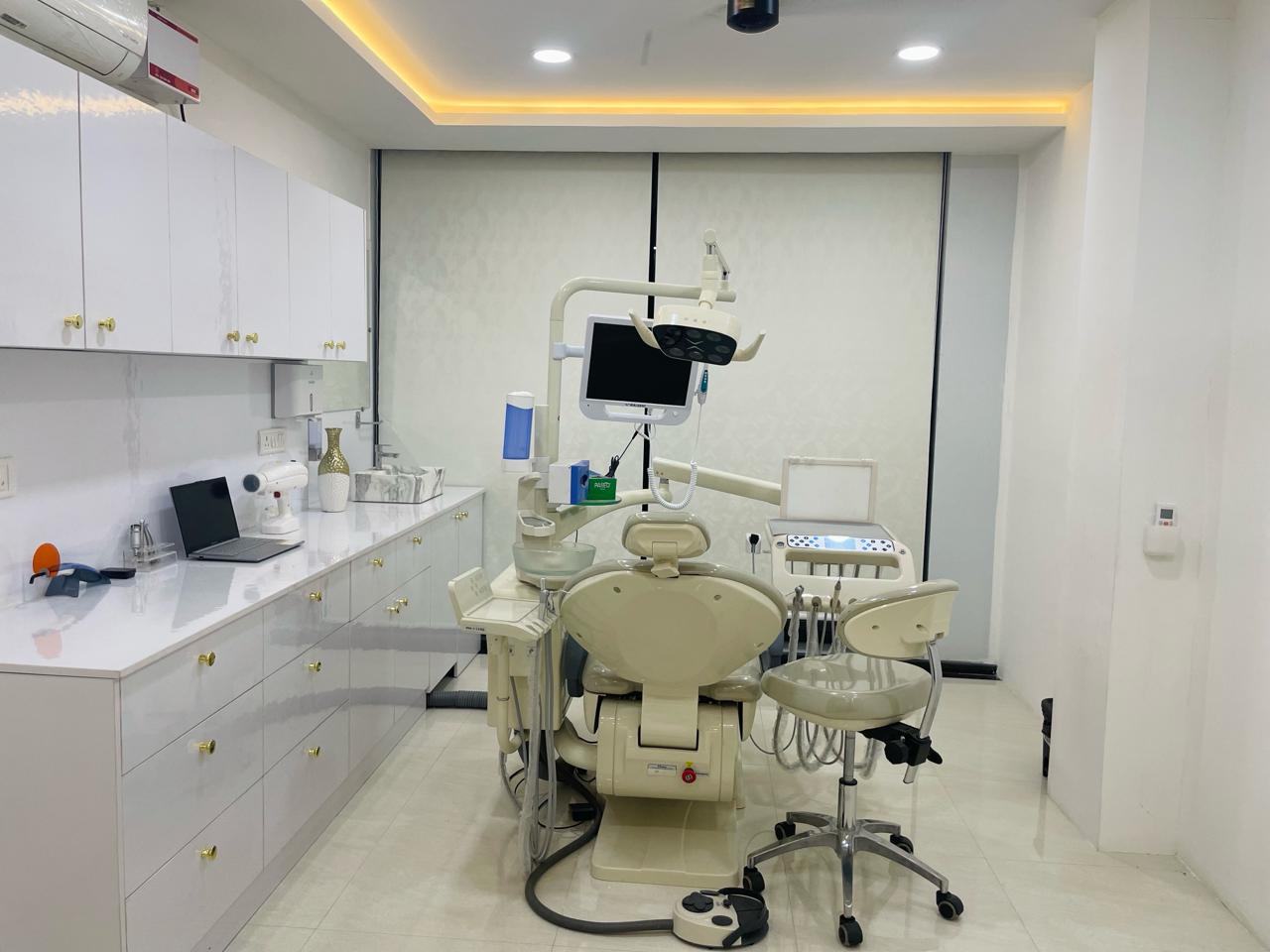
At our Velachery clinic, Dr. Sivaranjani asks about your health, medicines, pregnancy and tobacco use. She then checks your gums for plaque, tartar, swelling and recession. With a thin, blunt probe she gently measures the space between each tooth and the gum. In healthy gums it is usually about 1–3 mm and does not bleed; deeper pockets can be a sign of periodontitis. X-rays show the bone level where needed.

Gingivitis usually clears with a professional clean and better home care. Periodontitis needs deep cleaning and regular maintenance; see gum treatment by a periodontist in Velachery for the steps. You get a clear plan before treatment starts.
Frequently asked questions
Why do my gums bleed when I floss?
If you have just started flossing, some bleeding is common because the gums between the teeth are inflamed. Floss gently every day, curving it around each tooth. The bleeding usually stops within one to two weeks. If it does not, get your gums checked.
Why do my gums bleed in the morning?
Usually for the same reason as at any other time: gums inflamed by plaque. Breathing through your mouth at night can also dry and irritate the gums. If you wake with blood in your mouth or on your pillow without brushing, get a gum check.
Can bleeding gums be treated at home?
Early gingivitis often clears with better home care alone. But brushing cannot remove tartar or clean deep gum pockets. If the bleeding has not settled in one to two weeks, you need a professional clean.
Which toothpaste is good for bleeding gums?
Use a fluoride toothpaste. Some toothpastes made for gum health, such as those with stannous fluoride, can reduce bleeding a little. How well you brush and clean between your teeth matters far more than the paste.
Can bleeding gums be a sign of something serious?
Usually not; most cases are gum inflammation from plaque. Left untreated, though, gum disease can lead to receding gums and loose teeth. Rarely, bleeding gums point to a blood or general health problem, so see your doctor if they bleed on their own or with bruising, nosebleeds or fever.
Is it normal for gums to bleed during pregnancy?
Yes, it is common, because pregnancy hormones make the gums react more strongly to plaque. Keep brushing and cleaning between your teeth. A dental check-up and cleaning are safe during pregnancy; tell us you are pregnant. Come in sooner if a swelling appears on the gum.
Book a visit in Velachery
If your gums bleed when you brush and it has not settled, book a gum check with Dr. Sivaranjani. Call +91 99977 97777, WhatsApp us or get directions.
Luxe Dental Clinic, No 3, 76A, Second Floor, Radha Mohan Street, Periyar Nagar, Velachery, Chennai 600042 (near Phoenix MarketCity). Open Monday–Saturday, 10:00 AM – 8:30 PM. Sunday closed. More about our dental clinic in Velachery.
Recent Posts

luxecentre 20 Oct 2026
Bleeding Gums When Brushing: Causes, Home Care and When to See a Periodontist in Velachery