
Gum Treatment by a Periodontist in Velachery
Gum treatment, also called periodontal treatment, treats bleeding, swollen or receding gums and the bone loss that can loosen teeth. It helps anyone with gum disease, especially people who have diabetes or use tobacco. At our Velachery clinic, Dr. Sivaranjani, a periodontist (gum specialist) with an MDS in Periodontics, examines your gums, plans your care and sees you through treatment and maintenance.
- ★ 4.9 Google rating
- Periyar Nagar, Velachery (near Phoenix MarketCity)
- Mon–Sat 10 AM – 8:30 PM
Your periodontist: Dr. R. Sivaranjani, MDS (Periodontics)
Dr. Sivaranjani holds an MDS (Master of Dental Surgery) in periodontics. This branch of dentistry treats the gums and the bone that hold your teeth. She founded Luxe Dental Clinic and has practised since 2014. She assesses your gums, carries out your treatment and reviews you at each maintenance visit.
What is gum disease? Gingivitis vs periodontitis
Gum disease starts with plaque, the sticky layer of bacteria on teeth. If it is not removed, it hardens into tartar and inflames the gums. There are two main stages.
| Gingivitis | Periodontitis | |
|---|---|---|
| What is affected | Gums only | Gums, plus the bone and fibres that hold teeth |
| Common signs | Red, swollen gums that bleed on brushing | Bleeding, bad breath, receding gums, gaps, loose teeth |
| Can it be reversed? | Yes, with cleaning and good home care | It can be controlled and kept stable, but not fully reversed. Lost bone does not grow back on its own. |
| Usual treatment | Scaling and polishing | Deep cleaning, sometimes surgery, then regular maintenance |
Smoking, chewing tobacco, diabetes, pregnancy and a family history of gum disease all raise your risk.
Who needs gum treatment? Signs to watch for
- Gums that bleed when you brush, floss or eat
- Red, swollen or tender gums
- Bad breath that keeps coming back
- Gums pulling back, so teeth look longer
- New gaps, or teeth that feel loose or have moved
Gum disease often causes no pain until it is quite far along, so regular check-ups matter.
Bleeding gums when you brush: what it means
Healthy gums do not bleed when you brush or floss. Bleeding usually means the gums are inflamed by plaque at the gum line. At this early stage, called gingivitis, it can usually be reversed with a professional cleaning and better daily brushing and flossing.
Keep brushing gently even if your gums bleed: stopping lets more plaque build up. See a periodontist if the bleeding lasts more than a week or two, keeps coming back, or comes with swelling, bad breath, gums pulling back or loose teeth. Diabetes, pregnancy, smoking and some medicines can make gums bleed more, so tell us about these. If your gums bleed without brushing, or you bruise easily, see your doctor as well.
Step by step at our clinic
- Gum assessment. We review your health, medicines and smoking. Dr. Sivaranjani measures the pocket around each tooth with a fine probe and checks for looseness. X-rays show bone levels.
- Your plan. She explains the stage of your gum disease and your options, with a written estimate.
- Scaling and root planing (deep cleaning). Under local anaesthesia, tartar and bacteria are removed from the roots below the gum line. The roots are smoothed so the gums can heal and tighten. This is usually done in one to four sittings, one part of the mouth at a time.
- Home care coaching. We show you how to clean between your teeth. Home care matters as much as clinic care.
- Review at 6–8 weeks. We measure the pockets again to see how your gums have healed.
- Further treatment, if needed. If deep pockets remain, Dr. Sivaranjani may advise gum surgery.
- Maintenance every 3–4 months keeps the disease under control.
Gum surgery she may advise: flap surgery and grafts
- Flap surgery: the gum is gently lifted back so the roots can be cleaned thoroughly. Then it is stitched back snugly around the teeth.
- Bone grafts: graft material is placed where gum disease has destroyed bone, to help new bone form.
- Guided tissue regeneration: a thin membrane is placed between the gum and the bone, often with a graft. It gives bone and supporting fibres a chance to regrow. It suits only certain types of bone loss.
- Gum grafts: for receding gums, a small piece of tissue is placed to cover exposed roots. It usually comes from the roof of the mouth.
Many people need no surgery; deep cleaning and maintenance are enough.
Is gum treatment painful?
Deep cleaning and gum surgery are done under local anaesthesia. Most people feel pressure rather than pain. Gums are usually tender for a few days afterwards. Teeth may be sensitive to cold for a week or two; a sensitivity toothpaste helps. Dr. Sivaranjani will advise you on painkillers. After surgery, stitches are usually removed after 1–2 weeks.
How many sittings does gum treatment take?
| Step | Usual visits |
|---|---|
| Gum assessment and X-rays | 1 |
| Scaling and root planing | Usually 1–4 sittings |
| Review | 6–8 weeks later |
| Gum surgery, if needed | 1 per area, plus a stitch-removal visit |
| Maintenance | Every 3–4 months, ongoing |
Recovery and aftercare
- Eat once the numbness wears off, and choose soft food for a day or two.
- From the next day, rinse gently with warm salt water, unless told otherwise.
- Keep brushing gently. After surgery, avoid brushing the treated area until we say so, and use any prescribed mouthwash.
- Avoid smoking. It slows healing and makes gum disease more likely to return.
Gum disease and diabetes
The link works both ways. High blood sugar makes gum disease more likely and more severe, and slows healing. Gum inflammation can also make blood sugar harder to control, and studies suggest treating it may modestly help. If you have diabetes, tell us your recent sugar readings, and plan on maintenance every 3–4 months. Read more about the impact of diabetes on oral health.
Risks and when to call us
As swollen gums heal, they shrink. Teeth can look longer, and small gaps may appear between them. Sensitivity is common for a while. Infection after surgery is uncommon. Some teeth with very severe bone loss cannot be saved. If a tooth must be removed, we will discuss replacements such as dental implants. Call us if you have:
- Swelling, fever, or pain that worsens after two or three days
- Bleeding that does not stop with firm pressure
- A stitch that comes loose early
Gum treatment cost in Chennai: what affects it
Cost depends on the stage of gum disease and how many areas need treatment. It also depends on the number of deep-cleaning sittings, and whether surgery or grafts are needed. We give you a written estimate after your check-up, before treatment starts. Ask us about payment options.
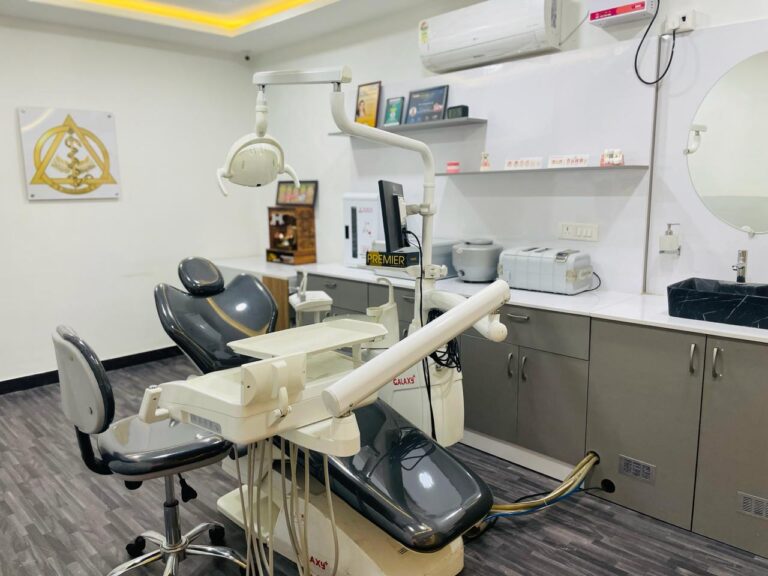
Why patients choose Luxe Dental
- Gum treatment is Dr. Sivaranjani’s own postgraduate field.
- Rated 4.9★ from 272 Google reviews (October 2026).
- The same dentist plans your treatment and sees you at every maintenance visit.
- In Velachery, near Phoenix MarketCity. Open Monday to Saturday, 10:00 AM – 8:30 PM.
FAQs
Can gum disease be cured?
Gingivitis can be fully reversed with cleaning and good home care. Periodontitis cannot be fully reversed, because lost bone does not grow back on its own. But with treatment and regular maintenance, it can be controlled and kept stable for many years.
Will my loose teeth become firm again?
Often they become somewhat firmer as the swelling settles. How much depends on how much bone is left. Dr. Sivaranjani will tell you honestly which teeth have a good outlook.
Should I stop brushing if my gums bleed?
No. Bleeding is a sign of inflammation, not of brushing too much. Keep brushing gently twice a day and clean between your teeth. If bleeding lasts more than a week or two, see us.
Can my blood pressure tablets affect my gums?
Yes, some can. Calcium channel blockers such as amlodipine and nifedipine can cause gum overgrowth, where gums swell over the teeth. Some anti-seizure medicines and ciclosporin can too. Good cleaning helps. Do not stop a medicine on your own; we can work with your doctor.
Why do I need maintenance every 3–4 months?
Bacteria under the gums tend to build up again within a few months. Regular maintenance clears them before they cause more damage, which keeps treated gums stable.
What is deep cleaning of teeth and gums?
Deep cleaning, also called scaling and root planing, removes plaque and tartar from below the gum line and smooths the root surfaces so the gums can heal and tighten around the teeth. It is often done one part of the mouth at a time, with local anaesthesia if needed. It is different from a routine scale and polish, which cleans above the gum line.
Related treatments
Book a visit in Velachery
If your gums bleed, feel tender or look like they are shrinking, book a gum check with Dr. Sivaranjani. Call +91 99977 97777, WhatsApp us or get directions.
Luxe Dental Clinic, No 3, 76A, Second Floor, Radha Mohan Street, Periyar Nagar, Velachery, Chennai 600042 (near Phoenix MarketCity). Open Monday–Saturday, 10:00 AM – 8:30 PM. Sunday closed. See clinic details, map and directions.
