
Wisdom Tooth Removal in Velachery
Wisdom tooth removal is a minor procedure to take out a third molar that is causing pain, infection or damage. It helps adults and older teenagers whose wisdom teeth cause trouble. Not every wisdom tooth needs to come out. At our Velachery clinic, Dr. Sivaranjani first checks the tooth with an X-ray. If removal is needed, it is done under local anaesthesia.
- ★ 4.9 Google rating
- Periyar Nagar, Velachery (near Phoenix MarketCity)
- Mon–Sat 10 AM – 8:30 PM
What is wisdom tooth removal?
Wisdom teeth are the third molars, the last teeth at the back of each jaw. They usually appear between 17 and 25 years of age. Often there is not enough room for them. A tooth stuck under the gum, or against the tooth in front, is called “impacted”.
When is removal needed, and when is it not?
See us for a check if you notice:
- pain at the back of the jaw that comes and goes
- a red, swollen or bleeding gum behind your last molar
- a bad taste, or food that keeps getting stuck there
- jaw stiffness, or difficulty opening your mouth fully
Removal is usually advised when a wisdom tooth causes repeated gum infections, has decay that cannot be filled well, or harms the tooth in front.
Removal is often not needed when the tooth has come through fully and can be cleaned well. A buried tooth with no symptoms and no damage on the X-ray can usually stay. We check it at your regular visits.
If a tooth is likely to cause trouble, removal is often easier in your late teens or twenties. Read more in our post Wisdom tooth removal: when and why it’s necessary.
Step by step at our clinic
- Check-up. We ask about your symptoms, health and medicines. Tell us if you take blood thinners, have diabetes or are pregnant. Do not stop any medicine without your doctor’s advice.
- OPG X-ray first. An OPG is one wide X-ray of your teeth and jaws. It shows the tooth’s angle, its roots, and how close it sits to the nerve or sinus.
- Your plan. We explain whether the tooth should come out, whether removal will be simple or surgical, and the risks.
- Numbing. Local anaesthesia numbs the area. You stay awake.
- Removal. In a simple removal, the tooth is loosened and lifted out. A surgical removal needs a small cut in the gum. Sometimes the tooth is divided into pieces, so it comes out with less force.
- Stitches and gauze. Stitches may be placed to help the gum heal. You bite on gauze, and we explain aftercare.
- Review visit. Usually about a week later, to check healing and remove stitches if needed.
Is wisdom tooth removal painful?
Removal is done under local anaesthesia. The injection may sting briefly. After that, most people feel pressure rather than pain. If you feel anything sharp, raise your hand and we will give more anaesthetic. Some soreness, swelling and jaw stiffness are normal for a few days afterwards. Pain relief your dentist advises usually keeps it manageable.
Simple vs surgical removal: time and visits
| Simple removal | Surgical removal | |
|---|---|---|
| Used when | The tooth has fully come through the gum | The tooth is under the gum, tilted or has curved roots |
| Visits | Check-up and OPG, removal, review if needed | Check-up and OPG, removal, review about a week later |
| Time in the chair | Often 20–40 minutes | Usually 30–60 minutes, sometimes longer |
| Stitches | Sometimes | Usually |
| Feeling better | Usually 2–3 days | Usually 4–7 days |
These are typical ranges. Removal may be on the day of your check-up or later.
Recovery day by day
- Day 1: Bite on the gauze for 30–45 minutes. Some oozing is normal. Do not rinse, spit, smoke or use a straw, as these can disturb the blood clot. Hold a cold pack on your cheek, 15–20 minutes at a time.
- Days 2–3: Swelling and stiffness usually peak now. Start gentle warm salt-water rinses after meals. Brush carefully near the socket.
- Days 4–7: Swelling and soreness ease. A warm compress can help a stiff jaw. Slowly return to normal food.
- Week 2 onwards: Most people feel back to normal. The gum closes over a few weeks.
Risks and when to call us
Most people heal without problems.
- Swelling, bruising and a stiff jaw are common and usually settle within a week.
- Dry socket: the blood clot is lost, and the empty socket becomes painful 2–4 days later. It is more common in smokers and after removing lower wisdom teeth. It is not dangerous. We clean the socket and place a soothing dressing.
- Temporary numbness: lower roots can lie near the nerve that gives feeling to the lip, chin and tongue. Rarely, this nerve is bruised, causing tingling or numbness. It usually recovers on its own over weeks to months. Permanent numbness is very rare. The OPG helps us judge this risk beforehand.
- Bleeding, infection or a small sinus opening (upper teeth) are uncommon.
Call us on +91 99977 97777 if you have:
- bleeding that does not slow with firm pressure
- pain or swelling that gets worse after day 3
- fever, pus, or a bad taste that will not clear
- numbness that lasts into the next day
- blood or pus from the nose after upper tooth removal
If breathing or swallowing becomes difficult, go to the nearest hospital emergency department.
Wisdom tooth removal cost in Chennai: what affects it
The cost depends on simple or surgical removal, how deep the tooth sits, and how many teeth are removed. The OPG, medicines and any infection treatment also count. We give you a written estimate after your check-up, before treatment starts. Ask us about payment options.
Other tooth extractions
We also remove other teeth that cannot be saved: a tooth broken below the gum line, decay too deep to repair, a tooth loosened by advanced gum disease, or baby teeth that stay too long and block the adult teeth. Before any extraction, we check whether a root canal, crown or gum treatment could save the tooth instead.
The tooth is numbed with local anaesthesia, and the aftercare is the same as after wisdom tooth removal. If the gap needs filling, we explain your options, such as an implant, a bridge or a denture. Read a case study of infected upper molars treated at our clinic.
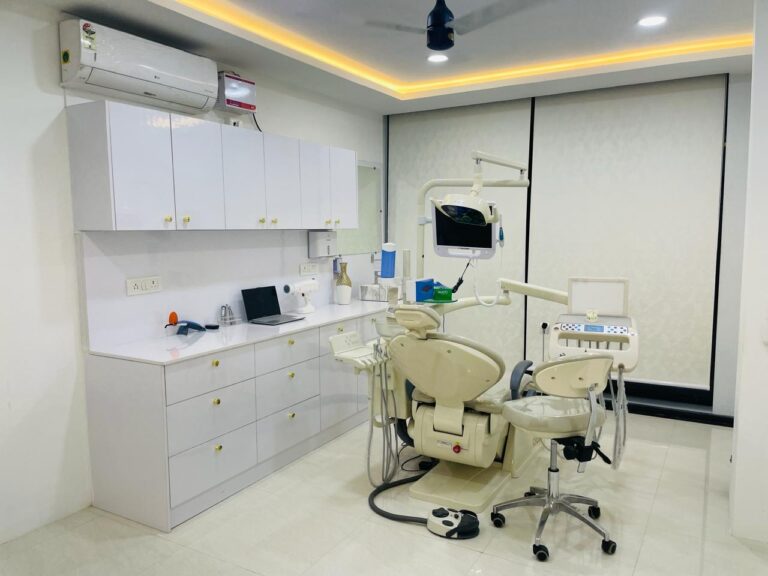
Why patients choose Luxe Dental
- Dr. R. Sivaranjani, practising since 2014, has an MDS in periodontics (gum treatment).
- One dentist sees you through, from the X-ray to the review visit.
- Rated 4.9★ from 272 Google reviews (October 2026).
- Near Phoenix MarketCity, Velachery, open Monday–Saturday. You can call after hours if a problem comes up.
Frequently asked questions
How many days off work will I need?
After a simple removal, many people return to desk work the next day. After a surgical removal, plan for 2–3 days off, or more if your work is physical. Avoid heavy exercise for a few days.
What can I eat after wisdom tooth removal?
Wait until the numbness wears off. For 2–3 days, eat soft, cool or lukewarm food, such as curd rice, idli, kanji or mashed vegetables. Avoid hot, spicy and crunchy food and alcohol. Chew on the other side.
Can all four wisdom teeth be removed at once?
It depends. Some people prefer one appointment and one recovery. Others prefer one side at a time, so they can chew on the other side. Dr. Sivaranjani will advise you after the OPG, based on the teeth’s position, your health and your preference.
My wisdom tooth doesn’t hurt. Should it still come out?
Not always. If it is healthy, or buried with no damage on the X-ray, it can usually stay. We advise removal only when there is a clear reason.
Can a swollen wisdom tooth be removed straight away?
Sometimes. If the gum is badly infected, your dentist may first clean the area and settle the infection. Antibiotics are used only when prescribed. The tooth is removed once the area is calmer.
Related treatments
Book a visit in Velachery
Book a check-up and X-ray, and we will tell you if your wisdom tooth needs to come out. Call +91 99977 97777, WhatsApp us or get directions.
Luxe Dental Clinic, No 3, 76A, Second Floor, Radha Mohan Street, Periyar Nagar, Velachery, Chennai 600042 (near Phoenix MarketCity). Open Monday–Saturday, 10:00 AM – 8:30 PM. Sunday closed. See clinic details, map and directions.
